Often, when I am consulting with advocates about working with a domestic violence or sexual assault survivor who has complex needs, an advocate will state that he/she is not trained or equipped to work with a survivor who has mental health issues. An advocate may feel that only a person who is trained in one of the alphabet interventions (EMDR, DBT, CBT, TF-CBT, etc.) has the skills necessary to provide what the survivor needs. Fortunately, the field of counseling/psychology is learning what grass roots advocates have known for years. It is the quality of the relationship between the survivor and the counselor/advocate that determines the person’s satisfaction with the intervention or contact.
Back in the 1950s and 60s Carl Rogers developed humanistic psychology and was considered to be at the forefront of understanding the need to develop therapeutic relationships. Here are the tenants of humanistic or client centered therapy as outlined in Rogers’ books Client Centered Therapy and On Becoming a Person:
The therapeutic relationship consists of a non-judgmental attitude, mutual respect, empathy, and unconditional positive regard.
The client has the answers.
The therapist’s job is to lead the client toward this self-knowledge.
The therapist’s opinion is unimportant.
Do these sound familiar? They should. They are the basics of empowerment based advocacy.
Carl Rogers’ work was well-respected until the mid 1990s when managed care companies began to require the use of evidence based interventions with measurable outcomes that could be a part of brief therapy (usually 6-8 sessions). Since it is difficult to measure attitudes and the value of a therapeutic relationship that develop over time, Rogers’ theories were set aside. Unfortunately, these new evidence based interventions did not necessarily meet the needs of clients and many dropped out of treatment.
Barry Duncan and Scott Miller, co-founders of the Institute for the Study of Therapeutic Change have authored and edited numerous professional articles and books. They have done research over 40 years to determine what really matters in the day to day work of a therapist and found the following:
The client's view of the relationship [with the therapist] is the 'trump card' in therapy outcome... Clients who rate the relationship highly are very likely to be successful in achieving their goals. Despite how chronic, intractable or 'impossible' a case may appear, if the client's view of the relationship is favorable, change is more likely to occur." From The Heart and Soul of Change: What Works in Therapy by Mark Hubble, Barry Duncan and Scott Miller.
In Judith Herman, M.D.’s book Trauma and Recovery, she outlines three stages of recovery from trauma – safety, remembrance and mourning, and reconnection. Advocates provide the safe place for all three stages. Advocates provide the means for a victim to obtain safety if she chooses and creates the safe relationship within the survivor can tell her story and reconnect and develop a trusting relationship. This does not need to be done through the use of evidence based interventions. It just takes being willing to connect and maintain a safe and trusting relationship.
What about someone with severe mental illness? In the community mental health system, the person who has the most contact with a person with a severe and persistent mental illness (the persons whom most advocates seem to feel unprepared to work with) is the client’s mental health case manager. In my experience as a case manager supervisor I found it was not what interventions that were used in working with a client, it was the relationship of trust and respect, non-judgment, and positive regard that predicted success for the person with the mental illness. Case managers are not necessarily trained therapists. Most have the same education and training as domestic violence advocates. They meet with persons with paranoid schizophrenia and psychosis in the clients’ homes and assist them in managing their daily lives. They may have some basic knowledge of an evidence based practice such as DBT (dialectical behavior therapy), but it is the quality of the relationship that is the basis for success as defined by the client.
Showing posts with label empowerment. Show all posts
Showing posts with label empowerment. Show all posts
Monday, May 21, 2012


Monday, January 25, 2010
Does understanding Trauma influence how we advocate and use the empowerment model?
Over the past few months I have been challenged to think about my view of the empowerment model and what advocacy means when we have a stronger understanding of how trauma affects the lives of survivors of intimate partner violence. I have had a number of conversations with program directors and advocates on this topic and would like to invite readers of this blog to engage their co-workers in this discussion at their agencies or by commenting on this post.
WISE of the Upper Valley has an excellent position paper on the empowerment model that I have added to the links to the left. This definition can be the starting point for discussions as to what empowerment means to you and your program.
Empowerment is a multi- dimensional, social process of increasing the capacity of individuals or groups to make choices and to transform those choices into desired actions and outcomes. This process creates the power to use these choices in his or her own life, community and society, with individuals acting on issues that they define as important.
What strikes me first about this definition is the idea that empowerment is a process and is multi-dimensional. I would like to challenge you to consider what the role of the advocate is in that process. As a process, empowerment is not necessarily something that you can hand the survivor at the first meeting and have the expectation that they will then be able to move forward and make choices.
From a trauma informed perspective, we have learned that due to being in survival mode for many years and dealing with the repercussions of ongoing trauma or the effects of extreme childhood, many survivors have been unable to develop skills and obtain the knowledge that they need in order to be able to transform their lives. Advocacy means that we work to provide a safe place and “empower clients by providing information, tools, resources, and opportunities, and work with clients respectfully, recognizing that the system is confusing and overwhelming to a victim of violence. (WISE)”
I have heard a wide range of responses to idea of what empowerment means when it comes to working with survivors of violence who have been self medicating with drugs and alcohol or who may have a mental health issue. Some advocates may see the drug use as a choice and that under the empowerment model there should be no intervention. Other advocates may be on the other end of the continuum and feel that empowerment means that you confront the person and strongly encourage them to seek counseling.
Knowing what we know about trauma and empowerment, we can find a point on the continuum that works for both the advocate and the survivor. By remembering that the person’s drug use is a primary coping skill, we can begin to advocate and empower by introducing her to new coping skills and support her in choosing her own way. This may mean that she will choose to continue to use but we will have done an advocates job by “providing the information, tools, resources and opportunities” to make different choices at some time in the future.
I often comment that empowering survivors can feel as if we are on the side of a train track watching the survivor stand on the track as a train comes barreling toward her. We are calmly telling her that she has the choice to step to the left of the track, the right of the track or stay on the track. Our job does not end there. We cannot grab or push her off the track, but we can provide the information she needs in order to make a decision about which way she goes. Because of the trauma, many survivors are very afraid and uncertain of what lies on the side of those tracks and actually may choose to deal with the train that they know. However, as they continue, they will carry the knowledge and respect they received from the advocate and will be able to make different choices in the future.
I would also like to encourage discussion as to what advocacy means. Advocacy means different things to different people, Last week I was holding a six month old baby so that a mother could feed her other two children. I strongly feel that this was advocacy. Anything that provides the space for another person to be able to meet her needs can be considered advocacy. Yes, I know that outside of the shelter she would need to be able to figure out how to feed twins and a two year old, but at this time she was still dealing with the trauma of her IPV and the stress of being in new surroundings. By holding that child I was able to give her breathing space to take the next step. On another day or time, it may have been better for her to have problem solved for her self but on her first day in shelter an extra hand helped her navigate just a little better and she was able to make decisions about the care of her children.
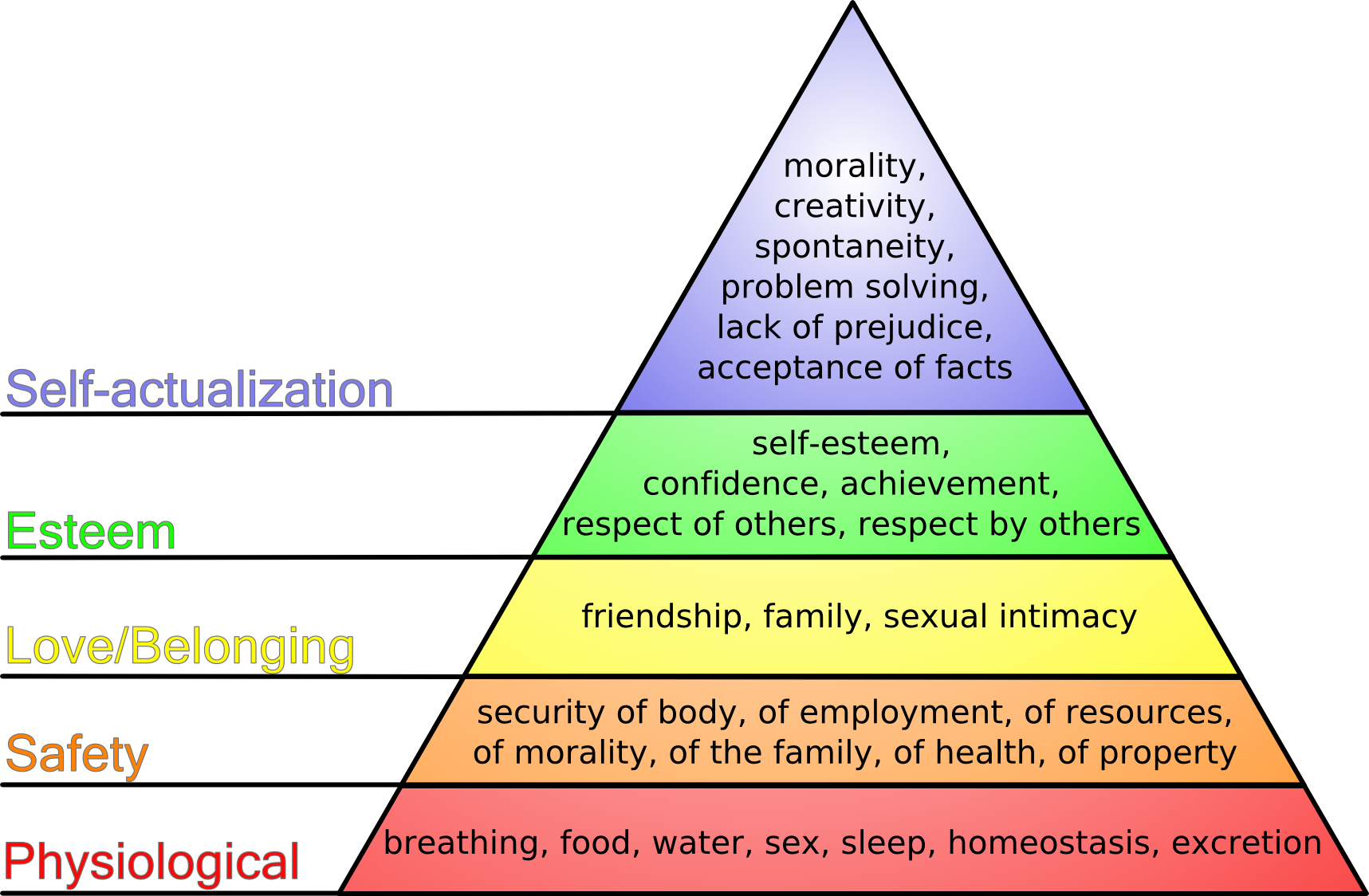
Over the years I have learned that the most important thing I learned in my counseling classes was Maslow’s Hierarchy of Needs. In the hierarchy we learn that the most basic needs of food, shelter and clothing need to be attended to first before a person can be empowered to move up the hierarchy to personal and spiritual fulfillment. For us, advocacy begins at that bottom level of the hierarchy. If a person has been traumatized, as all of our survivors have, she will be focusing solely on her survival on a day to day basis and the more we facilitate the provision of the basic needs the sooner she will be open to moving toward empowerment.

In closing, I encourage you to use this article as a means to carry on with the discussion regarding empowerment and the role of advocacy.
WISE of the Upper Valley has an excellent position paper on the empowerment model that I have added to the links to the left. This definition can be the starting point for discussions as to what empowerment means to you and your program.
Empowerment is a multi- dimensional, social process of increasing the capacity of individuals or groups to make choices and to transform those choices into desired actions and outcomes. This process creates the power to use these choices in his or her own life, community and society, with individuals acting on issues that they define as important.
What strikes me first about this definition is the idea that empowerment is a process and is multi-dimensional. I would like to challenge you to consider what the role of the advocate is in that process. As a process, empowerment is not necessarily something that you can hand the survivor at the first meeting and have the expectation that they will then be able to move forward and make choices.
From a trauma informed perspective, we have learned that due to being in survival mode for many years and dealing with the repercussions of ongoing trauma or the effects of extreme childhood, many survivors have been unable to develop skills and obtain the knowledge that they need in order to be able to transform their lives. Advocacy means that we work to provide a safe place and “empower clients by providing information, tools, resources, and opportunities, and work with clients respectfully, recognizing that the system is confusing and overwhelming to a victim of violence. (WISE)”
I have heard a wide range of responses to idea of what empowerment means when it comes to working with survivors of violence who have been self medicating with drugs and alcohol or who may have a mental health issue. Some advocates may see the drug use as a choice and that under the empowerment model there should be no intervention. Other advocates may be on the other end of the continuum and feel that empowerment means that you confront the person and strongly encourage them to seek counseling.
Knowing what we know about trauma and empowerment, we can find a point on the continuum that works for both the advocate and the survivor. By remembering that the person’s drug use is a primary coping skill, we can begin to advocate and empower by introducing her to new coping skills and support her in choosing her own way. This may mean that she will choose to continue to use but we will have done an advocates job by “providing the information, tools, resources and opportunities” to make different choices at some time in the future.
I often comment that empowering survivors can feel as if we are on the side of a train track watching the survivor stand on the track as a train comes barreling toward her. We are calmly telling her that she has the choice to step to the left of the track, the right of the track or stay on the track. Our job does not end there. We cannot grab or push her off the track, but we can provide the information she needs in order to make a decision about which way she goes. Because of the trauma, many survivors are very afraid and uncertain of what lies on the side of those tracks and actually may choose to deal with the train that they know. However, as they continue, they will carry the knowledge and respect they received from the advocate and will be able to make different choices in the future.
I would also like to encourage discussion as to what advocacy means. Advocacy means different things to different people, Last week I was holding a six month old baby so that a mother could feed her other two children. I strongly feel that this was advocacy. Anything that provides the space for another person to be able to meet her needs can be considered advocacy. Yes, I know that outside of the shelter she would need to be able to figure out how to feed twins and a two year old, but at this time she was still dealing with the trauma of her IPV and the stress of being in new surroundings. By holding that child I was able to give her breathing space to take the next step. On another day or time, it may have been better for her to have problem solved for her self but on her first day in shelter an extra hand helped her navigate just a little better and she was able to make decisions about the care of her children.
Over the years I have learned that the most important thing I learned in my counseling classes was Maslow’s Hierarchy of Needs. In the hierarchy we learn that the most basic needs of food, shelter and clothing need to be attended to first before a person can be empowered to move up the hierarchy to personal and spiritual fulfillment. For us, advocacy begins at that bottom level of the hierarchy. If a person has been traumatized, as all of our survivors have, she will be focusing solely on her survival on a day to day basis and the more we facilitate the provision of the basic needs the sooner she will be open to moving toward empowerment.
In closing, I encourage you to use this article as a means to carry on with the discussion regarding empowerment and the role of advocacy.
Monday, January 11, 2010
Finding “A Woman’s Way Through the Twelve Steps”
When I first started working with survivors of intimate partner violence who were self medicating the pain of the violence there was a lot of criticism in the domestic violence community of the traditional 12 Step programs. This has continued over the years due to survivors continuing to be victimized within the 12 Step programs and the traditional approach maintained by substance abuse therapists who promote the 12 Step model. The empowerment model of domestic violence seems at odds with some of the steps which require a person taking a look at their “character defects” in order to take responsibility for their actions. Also, within the rooms of AA and NA, members can become emphatic in regards to beliefs that a person must be torn down before they can be built back up again. As we well know, survivors of violence have experienced that tearing down within their relationships and may find some interpretations of the 12 Steps to be another means of external forces exerting power and control in the life of the person using substances to cope.
The traditional approach to substance abuse treatment requires that the “addict” admit to having a disease, be willing to admit that they are powerless, take responsibility for their part of the problem and make sobriety a priority. In the trauma informed, empowerment model based approach, the advocate supports the survivor in making safety a priority and recognizing that the trauma the person has experienced has contributed to the increased use of substances or processes that mask the symptoms of the trauma. The survivor is also supported in knowing that they are not responsible for the trauma which led to the substance use.
Oftentimes, DV advocates are reluctant to address issues of substance abuse due to seeing the use as the person’s choice and her way of coping with her life. However, many times survivors see this as the only choice and an advocate can be of assistance in educating her as to other ways she can manage her life, increasing her self confidence and possibly leading her to the point where she can eventually see that there are other choices besides drinking or using drugs. It is not the role of the advocate to judge a survivor’s use of the substance, but be able to assist the survivor in maintaining safety and becoming personally empowered by having new choices available.
Another reason that DV advocates may be reluctant to address issues of substance use has to do with the lack of resources available to women to maintain their safety and sobriety and the fear of having a women revictimized within the recovery community. There are a few things that can be done to increase safety and make the 12 Step model more empowering for survivors. There are a number of different types of peer support programs for women in recovery but none are as prevalent and available as the 12 Step program. We have a number of women currently involved in the program coming into our agencies and it is valuable for us to have an understand of the model in order to converse with them about how recovery can be empowering.
First of all, in order to educate a woman about safety issues in regards to attending 12 Step meetings the following recommendations can be made:
1) Do not disclose where you staying to anyone in the group or reveal the name of your abuser.
2) If you go to a group and someone there knows the abuser, leave immediately and do not return to that meeting.
3) Try not to be predictable in which meetings are attended every week. A stalker may use a local meeting schedule as a way to follow a woman from meeting to meeting.
4) Do not accept rides from people you do not know or be the only passenger.
5) Attend “women’s only” groups as much as possible.
In A Woman’s Way Through the Twelve Steps, Stephanie S. Covington Ph.D. takes each of the 12 Steps and interprets them in a way that can be very valuable in working with survivors of trauma who are trying to find a way to manage their sobriety through the use of the support a 12 Step program can provide. In addition to the text, A Woman’s Way Through the Twelve Step, there is a workbook that can be used by someone working her way through the steps. See www.stephaniecovington.com for more resources.
Here is a very brief review of the steps and how they can be interpreted and used within the empowerment model I encourage you to read the book yourself since I cannot possibly cover all of the points here. . It is important to note that the steps are a process that can take years and should not be rushed. It is often recommended that the first three steps take a year or more and that the remaining steps be done as the person is ready. By using a workbook and a facilitated group, however, the steps can be done in a shorter period of time and then done more comprehensively at a later date.
• Step One – We admitted were powerless over alcohol – that our lives had become unmanageable.
This step is primary about becoming aware of how life has become unmanageable due to the use of the substances. We know as advocates that trauma may be the source of the unmanageability and we want to remind survivors that they are not responsible for the abuse in their lives. By acknowledging their lack of power in some areas of their lives (i.e. the actions of their abuser) they can then become free to act in areas where they do have power.
• Step Two – Came to believe that a power greater than ourselves could restore us to sanity.•
Step Three – Made a decision to turn our will and our lives over to the care of God as we understood Him.
These two steps generate a lot of resistance for survivors and advocates alike due to the suggestion that life will be better if we just had over power and control to another outside entity, This can raise fear and trepidation for someone who wants to regain power and control over her own life, especially when religion has been used as an excuse to perpetrate ongoing abuse.
Stephanie Covington encourages us to consider the use of the group as a higher power, particularly a group of women who have had the same struggles and who have found their way to empowerment, safety and sobriety. She also encourages women to find their own definition of God/Goddess/Higher Power and recognize that we do not need to be held to the constraints of a childhood religion that does not empower women.
• Step Four – Made a searching and fearless moral inventory of ourselves.
This step has been a block for most persons involved in 12 Step programs due to the fear of facing some of the demons of the past. The main points to remember are that this inventory is a process and not an event. It takes as long as it takes and not everything needs to be addressed in the first inventory. Also, Stephanie Covington encourages women to do an inventory of “Assets and Strengths” and “Challenges and Limitations” rather than the traditional inventory of “character defects.”
• Step Five – Admitted to God, to ourselves and to another human being the exact nature of our wrongs.
Done with an empowering approach this step can provide what many of our survivor support groups do. It helps the person put an end to secrecy, helps them find that other people feel the same, assists with self-acceptance and self forgiveness and starts the survivor on the road to celebration and gratitude for their assets and strengths and the support they receive from a community of women.
• Step Six – Were entirely ready to have God remove these defects of character.
This step provides the opportunity for a survivor to use “letting go” rituals to release some of the challenges and limitations she may believe about her life. By this time she may have learned enough about how the trauma has affected her that she will be able to release some of the coping skills that are no longer needed due to the development of new strategies.
• Step Seven – Humbly asked Him to remove our shortcomings.
This step is about relinquishing those former coping skills and recognizing how there is strength available to move forward. The word ‘humbly” often gets confused with humiliation. However, in this step humility means having a strong sense of who we are, realizing our limitations and acknowledging our strengths.
• Step Eight – Made a list of all persons we had harmed and became willing to make amends to them all.
This step is about relationships and the power of being able to recognize what we are responsible for and what others are responsible for. It is helpful to have a sponsor or therapist work with the survivor on this step as it is very easy to get off balance and start taking responsibility for the actions of others.
• Step Nine – Made direct amends to such people wherever possible except when to do so would injure them or others.
Personal responsibility can be a key to empowerment. The 12 Step program encourages direct and honest amends and this can only be done after the strong, balance approach in Step Eight. It is also mentioned that amends can be “living amends,” treating some with more respect or kindness than in the past. It also requires a willingness to accept whatever the person’s reaction may be to the amends. This about making amends, not necessarily about receiving forgiveness.
• Step Ten – Continued to take personal inventory and when we were wrong promptly admitted.
This step encourages staying present in the moment. As in Step Four, it is recommended to use the balanced approach of making an inventory of “Challenges and Limitations” and “Strengths and Assets.”
• Step Eleven – Sought through prayer and meditation to improve our conscious contact with God as we understood Him, praying only for knowledge of His will for us and the power to carry that out.
– “Prayer is an act of either reaching out to a Higher Power or going inward to a deeper knowing. Just as we described God our own way in Step Three, we can also come to prayer however we like.” Stephanie Covington
• Step Twelve – Having had a spiritual awakening as the result of these steps, we tried to carry this message to alcoholics and to practice these principles in all of our affairs.”
This step is an invitation to continue practicing the principles of the 12 Step program and inviting others to explore the support of the program.
This review is not necessarily a recommendation of the 12 Step program but is more of a means to help advocates be more informed about the model. Given how it is often the only type of support a survivor has for her recovery from substance use, it is valuable to be able to talk to survivors about how it can be used in an empowering way.
The traditional approach to substance abuse treatment requires that the “addict” admit to having a disease, be willing to admit that they are powerless, take responsibility for their part of the problem and make sobriety a priority. In the trauma informed, empowerment model based approach, the advocate supports the survivor in making safety a priority and recognizing that the trauma the person has experienced has contributed to the increased use of substances or processes that mask the symptoms of the trauma. The survivor is also supported in knowing that they are not responsible for the trauma which led to the substance use.
Oftentimes, DV advocates are reluctant to address issues of substance abuse due to seeing the use as the person’s choice and her way of coping with her life. However, many times survivors see this as the only choice and an advocate can be of assistance in educating her as to other ways she can manage her life, increasing her self confidence and possibly leading her to the point where she can eventually see that there are other choices besides drinking or using drugs. It is not the role of the advocate to judge a survivor’s use of the substance, but be able to assist the survivor in maintaining safety and becoming personally empowered by having new choices available.
Another reason that DV advocates may be reluctant to address issues of substance use has to do with the lack of resources available to women to maintain their safety and sobriety and the fear of having a women revictimized within the recovery community. There are a few things that can be done to increase safety and make the 12 Step model more empowering for survivors. There are a number of different types of peer support programs for women in recovery but none are as prevalent and available as the 12 Step program. We have a number of women currently involved in the program coming into our agencies and it is valuable for us to have an understand of the model in order to converse with them about how recovery can be empowering.
First of all, in order to educate a woman about safety issues in regards to attending 12 Step meetings the following recommendations can be made:
1) Do not disclose where you staying to anyone in the group or reveal the name of your abuser.
2) If you go to a group and someone there knows the abuser, leave immediately and do not return to that meeting.
3) Try not to be predictable in which meetings are attended every week. A stalker may use a local meeting schedule as a way to follow a woman from meeting to meeting.
4) Do not accept rides from people you do not know or be the only passenger.
5) Attend “women’s only” groups as much as possible.
In A Woman’s Way Through the Twelve Steps, Stephanie S. Covington Ph.D. takes each of the 12 Steps and interprets them in a way that can be very valuable in working with survivors of trauma who are trying to find a way to manage their sobriety through the use of the support a 12 Step program can provide. In addition to the text, A Woman’s Way Through the Twelve Step, there is a workbook that can be used by someone working her way through the steps. See www.stephaniecovington.com for more resources.
Here is a very brief review of the steps and how they can be interpreted and used within the empowerment model I encourage you to read the book yourself since I cannot possibly cover all of the points here. . It is important to note that the steps are a process that can take years and should not be rushed. It is often recommended that the first three steps take a year or more and that the remaining steps be done as the person is ready. By using a workbook and a facilitated group, however, the steps can be done in a shorter period of time and then done more comprehensively at a later date.
• Step One – We admitted were powerless over alcohol – that our lives had become unmanageable.
This step is primary about becoming aware of how life has become unmanageable due to the use of the substances. We know as advocates that trauma may be the source of the unmanageability and we want to remind survivors that they are not responsible for the abuse in their lives. By acknowledging their lack of power in some areas of their lives (i.e. the actions of their abuser) they can then become free to act in areas where they do have power.
• Step Two – Came to believe that a power greater than ourselves could restore us to sanity.•
Step Three – Made a decision to turn our will and our lives over to the care of God as we understood Him.
These two steps generate a lot of resistance for survivors and advocates alike due to the suggestion that life will be better if we just had over power and control to another outside entity, This can raise fear and trepidation for someone who wants to regain power and control over her own life, especially when religion has been used as an excuse to perpetrate ongoing abuse.
Stephanie Covington encourages us to consider the use of the group as a higher power, particularly a group of women who have had the same struggles and who have found their way to empowerment, safety and sobriety. She also encourages women to find their own definition of God/Goddess/Higher Power and recognize that we do not need to be held to the constraints of a childhood religion that does not empower women.
• Step Four – Made a searching and fearless moral inventory of ourselves.
This step has been a block for most persons involved in 12 Step programs due to the fear of facing some of the demons of the past. The main points to remember are that this inventory is a process and not an event. It takes as long as it takes and not everything needs to be addressed in the first inventory. Also, Stephanie Covington encourages women to do an inventory of “Assets and Strengths” and “Challenges and Limitations” rather than the traditional inventory of “character defects.”
• Step Five – Admitted to God, to ourselves and to another human being the exact nature of our wrongs.
Done with an empowering approach this step can provide what many of our survivor support groups do. It helps the person put an end to secrecy, helps them find that other people feel the same, assists with self-acceptance and self forgiveness and starts the survivor on the road to celebration and gratitude for their assets and strengths and the support they receive from a community of women.
• Step Six – Were entirely ready to have God remove these defects of character.
This step provides the opportunity for a survivor to use “letting go” rituals to release some of the challenges and limitations she may believe about her life. By this time she may have learned enough about how the trauma has affected her that she will be able to release some of the coping skills that are no longer needed due to the development of new strategies.
• Step Seven – Humbly asked Him to remove our shortcomings.
This step is about relinquishing those former coping skills and recognizing how there is strength available to move forward. The word ‘humbly” often gets confused with humiliation. However, in this step humility means having a strong sense of who we are, realizing our limitations and acknowledging our strengths.
• Step Eight – Made a list of all persons we had harmed and became willing to make amends to them all.
This step is about relationships and the power of being able to recognize what we are responsible for and what others are responsible for. It is helpful to have a sponsor or therapist work with the survivor on this step as it is very easy to get off balance and start taking responsibility for the actions of others.
• Step Nine – Made direct amends to such people wherever possible except when to do so would injure them or others.
Personal responsibility can be a key to empowerment. The 12 Step program encourages direct and honest amends and this can only be done after the strong, balance approach in Step Eight. It is also mentioned that amends can be “living amends,” treating some with more respect or kindness than in the past. It also requires a willingness to accept whatever the person’s reaction may be to the amends. This about making amends, not necessarily about receiving forgiveness.
• Step Ten – Continued to take personal inventory and when we were wrong promptly admitted.
This step encourages staying present in the moment. As in Step Four, it is recommended to use the balanced approach of making an inventory of “Challenges and Limitations” and “Strengths and Assets.”
• Step Eleven – Sought through prayer and meditation to improve our conscious contact with God as we understood Him, praying only for knowledge of His will for us and the power to carry that out.
– “Prayer is an act of either reaching out to a Higher Power or going inward to a deeper knowing. Just as we described God our own way in Step Three, we can also come to prayer however we like.” Stephanie Covington
• Step Twelve – Having had a spiritual awakening as the result of these steps, we tried to carry this message to alcoholics and to practice these principles in all of our affairs.”
This step is an invitation to continue practicing the principles of the 12 Step program and inviting others to explore the support of the program.
This review is not necessarily a recommendation of the 12 Step program but is more of a means to help advocates be more informed about the model. Given how it is often the only type of support a survivor has for her recovery from substance use, it is valuable to be able to talk to survivors about how it can be used in an empowering way.
Subscribe to:
Posts (Atom)